
Parents & Neurodivergent Teens
Autistic, ADHD & AuDHD Teenagers
Parenting a neurodivergent teenager can often feel confusing and contradictory.
Many families are trying to guide their child using developmental assumptions built around neurotypical development — or neurodivergent models interpreted through a neurotypical lens.
Neurodivergent development is often asymmetrical:
— Cognitive development may move ahead of the expected age curve.
— Emotional literacy and nervous system regulation may develop along a different timeline.
This creates a structural imbalance between thinking, feeling and regulation.
Many neurodivergent teenagers process the world primarily through cognition, which means emotional and nervous-system signals often need to be deliberately mapped into cognitive space before they can be understood and used well.
When teenagers are included in understanding the systems, pressures and decisions affecting them, predictability increases, the nervous system feels safer, and growth becomes easier.
Emotional literacy then becomes a learnable skill: recognising internal signals, understanding what they mean, and integrating them into clearer thinking, communication and relationships.
Start with a FREE 30-min chatDevelopmental Asymmetry
Neurodivergent development is rarely delayed, but more often unevenly developed.
Many autistic, ADHD and AuDHD teenagers show strong reasoning ability, advanced pattern recognition and the ability to engage with complex ideas earlier than expected.
At the same time, emotional literacy and nervous system regulation may still be catching up.
This difference between systems creates what is known as developmental asymmetry.
The cognitive system may already be operating at a more mature level, making the teenager appear very “grown up” in conversation and reasoning, while emotional processing and nervous system regulation are still developing.
This can create situations that appear contradictory to adults: a teenager may prefer conversations with adults, follow complex discussions and recognise patterns in situations — yet still become overwhelmed by an emotional trigger that feels confusing or disproportionate in the moment.
Many parents describe this as “a teenager who can debate like an adult, but sometimes reacts like a much younger child.”
When emotional load rises, the survival architecture of the nervous system can temporarily take over before the cognitive system has time to respond.
At that point behaviour is driven by extremely fast nervous system regulation rather than by deliberate reasoning.
Meltdowns and shutdowns are therefore often interpreted as teenage rebellion, behavioural problems or deliberate defiance.
In many cases they are closer to the nervous system responses of a much younger developmental stage — systems that are still emerging and learning how to integrate with cognition.
Understanding this uneven development is often the first step toward rebuilding communication and reducing emotional turbulence.
Cognition As The Gateway
Many neurodivergent teenagers process the world primarily through cognition.
Instead of treating that as a barrier, it can become the gateway through which emotional literacy and nervous system regulation develop.
For many neurodivergent teenagers, emotional and nervous system signals initially feel distracting or interruptive — something that gets in the way of thinking clearly.
This often leads to suppression of those signals so that thinking can continue uninterrupted.
Over time, that suppression can destabilise the internal system, because the information those signals carry is being ignored.
Neurodivergent Strengths.
Neurodivergent thinking also brings a number of natural strengths that can support this process:
— strong pattern recognition
— curiosity about the “why” behind behaviour or expectations
— intense focus when engaged with meaningful problems
— the ability to analyse systems and inconsistencies
— sensitivity to fairness and justice
— interest-driven memory
— innovative or unconventional problem solving
These strengths allow many neurodivergent teenagers to examine internal experiences with the same curiosity and analytical thinking they apply to external systems.
Using Cognition for Integration.
Using cognition to accept, examine, process and integrate emotional and nervous system signals allows them to transform from interference into useful and interesting information about what is happening internally.
Part of integration is learning when, where, why and how to apply neurodivergent strengths to internal experiences.
This includes recognising patterns in emotions, reactions and environments while also building systems that help identify moments of over-interpretation or heightened reactions.
Observable Improvements.
As cognition begins to work with emotional and nervous system signals rather than suppress them, several changes typically become visible.
Teenagers can start engaging deliberately with their internal experiences — building interoception, recognising patterns in their responses and developing the confidence to ask for co-regulation when needed, alongside learning self-regulation.
For many neurodivergent teenagers, once this integration begins, regulation improves significantly and episodes of meltdown or shutdown begin to reduce.
That understanding gives the mind something stable to build from.
Responsibility & Collaboration
Isolation increases unsafety
Many neurodivergent teenagers naturally recognise patterns and systems in the world around them. When properly informed, they are often surprisingly capable of contributing to conversations about expectations, responsibilities and decisions.
When they are excluded from those conversations, the system of family life appears to operate around them without context.
Because hierarchy alone rarely explains why authority deserves respect, unexplained rules can feel arbitrary or imposed. For teenagers who analyse systems, this often triggers an intense physiological alarm response of injustice or rejection.
Being moved through the system without explanation can make them feel less like participants and more like pieces being repositioned — like a pawn rather than a person.
Repeated experiences like this often intensify feelings of isolation and unsafety.
Inclusion creates understanding
Inclusion gradually changes this dynamic by making the system visible, understandable and able to be integrated.
When teenagers are included in conversations about boundaries, expectations and family pressures, they begin to see the wider picture around those decisions.
They start to recognise:
— the motivations and pressures influencing decisions
— how different choices and limits interact
— why certain expectations exist
— how responsibilities are shared within family life
As the why becomes visible, behaviour often shifts.
Instead of drifting within the system or reacting against it, teenagers begin participating within it.
Predictability creates safety
While experience and emotional regulation are still developing, parents remain the guard rails and safety net through openness, vulnerability and accountability.
However, when the systems and pressures around teenagers become visible and understandable, life becomes far more predictable.
There are fewer hidden decisions, unexplained rules or surprising demands appearing without context.
Predictability allows the nervous system to stop constantly scanning for injustice, rejection, surprise or sudden loss of autonomy.
As uncertainty reduces, the nervous system experiences greater stability and safety.
Safety allows iterative growth
As safety increases, emotional turbulence often begins to settle noticeably.
Parents frequently notice humour returning, curiosity reappearing and teenagers becoming more willing to talk, ask questions and take part in decisions.
Animated conversations return. Special interests often re-emerge as the brain leaves survival mode.
Over time, recovery from emotional surges becomes quicker and shutdowns or meltdowns reduce.
With greater safety and involvement, teenagers increasingly show interest in responsibility — helping solve problems, planning routines and managing parts of their own environment.
Responsibility can then expand gradually in line with growing capability and experience.
Emotional Literacy Development
Emotional and Nervous-System Signals
Emotional and nervous-system signals are the internal information the brain uses to understand what is happening within the body and the surrounding environment.
For most people, translating body signals into feelings happens automatically and intuitively.
For many neurodivergent teenagers that process is not intuitive — it is a skill. They often need to deliberately map physical and nervous-system signals into their cognitive space before they can recognise and understand what they are feeling.
Emotional and nervous-system signals are closely connected and include a wide range of internal experiences.
First-Response Nervous-System Signals
These instant, automatic responses arise from the body's organs, hormones, nerves and senses.
- blood flow
- hormone release
- temperature
- calmness or tension
- sensory activation or discomfort
- changes in energy or physical state: fatigue, adrenalin
Emotions
These arise when the mind interprets and combines multiple internal signals and triggers.
- anger
- fear
- sadness
- joy
- frustration
- relief
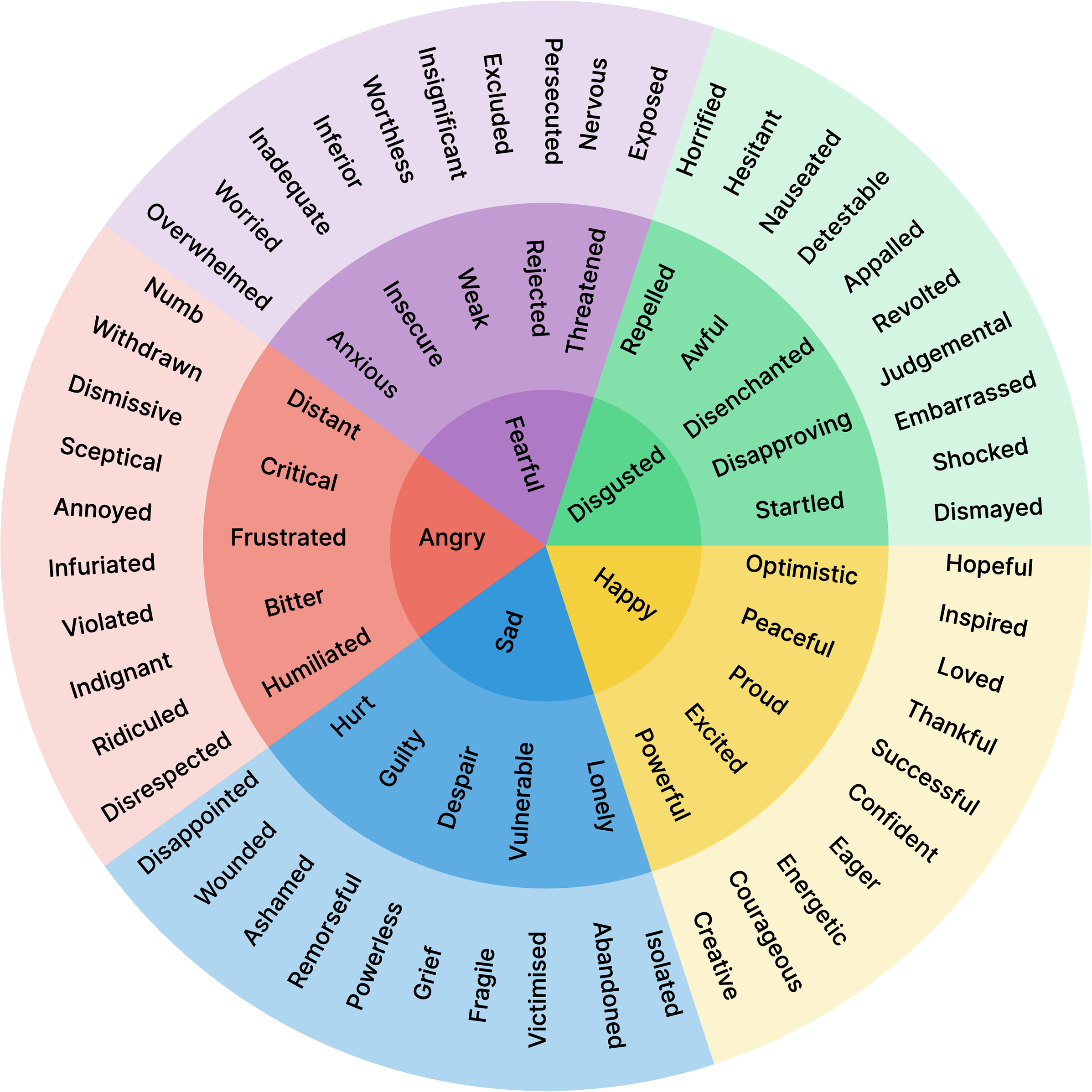
Understanding how these signals interact is an important part of emotional literacy.
It helps teenagers recognise that many internal reactions are signals from the body and nervous system rather than random feelings or behavioural problems.
What Happens Without Emotional Literacy
When internal signals are not understood they can feel confusing, intrusive, or overwhelming.
A reaction can occur before the teenager has had time to identify what the signal actually represents.
For example, if someone believes a spider is crawling on their arm, they may jump or thrash before they have time to realise what it is.
In a similar way, unfamiliar or poorly understood internal signals can provoke large reactions such as overwhelm, shutdown, or meltdowns.
Developing Emotional Literacy
Emotional literacy helps teenagers recognise, interpret and integrate the signals produced by the emotional and nervous-system layers of the body.
As they learn where these signals originate and how they combine, teenagers begin to recognise patterns in their internal experiences and understand what those signals are communicating.
This strengthens interoception and allows emotional and nervous-system signals to move from confusing interruptions into useful information that supports clearer thinking, effective living, deeper connections, and relationships.
Session shape
Typical sessions are 60 minutes, video or audio-only. Cadence is tailored—weekly, fortnightly, or variable depending on health and life. Breaks welcome; cameras recommended but optional. Between sessions, you can ask questions and request help or guidance as needed.
Come as you are. Let’s rebuild and grow together.